RuView v2934 released: Includes new BFI-compliant data collection and restricted research tools, as well as a fix for the Wasmtime security vulnerability.
RuView (WiFi DensePose) releases v2934: This is an automated release for CI, featuring new BFI validation and restricted research toolchain (#2055), a fix for the Wasmtime RUSTSEC-2026-0316 security vulnerability, and synchronized Docker image releases.
Related tags
Overview of Release
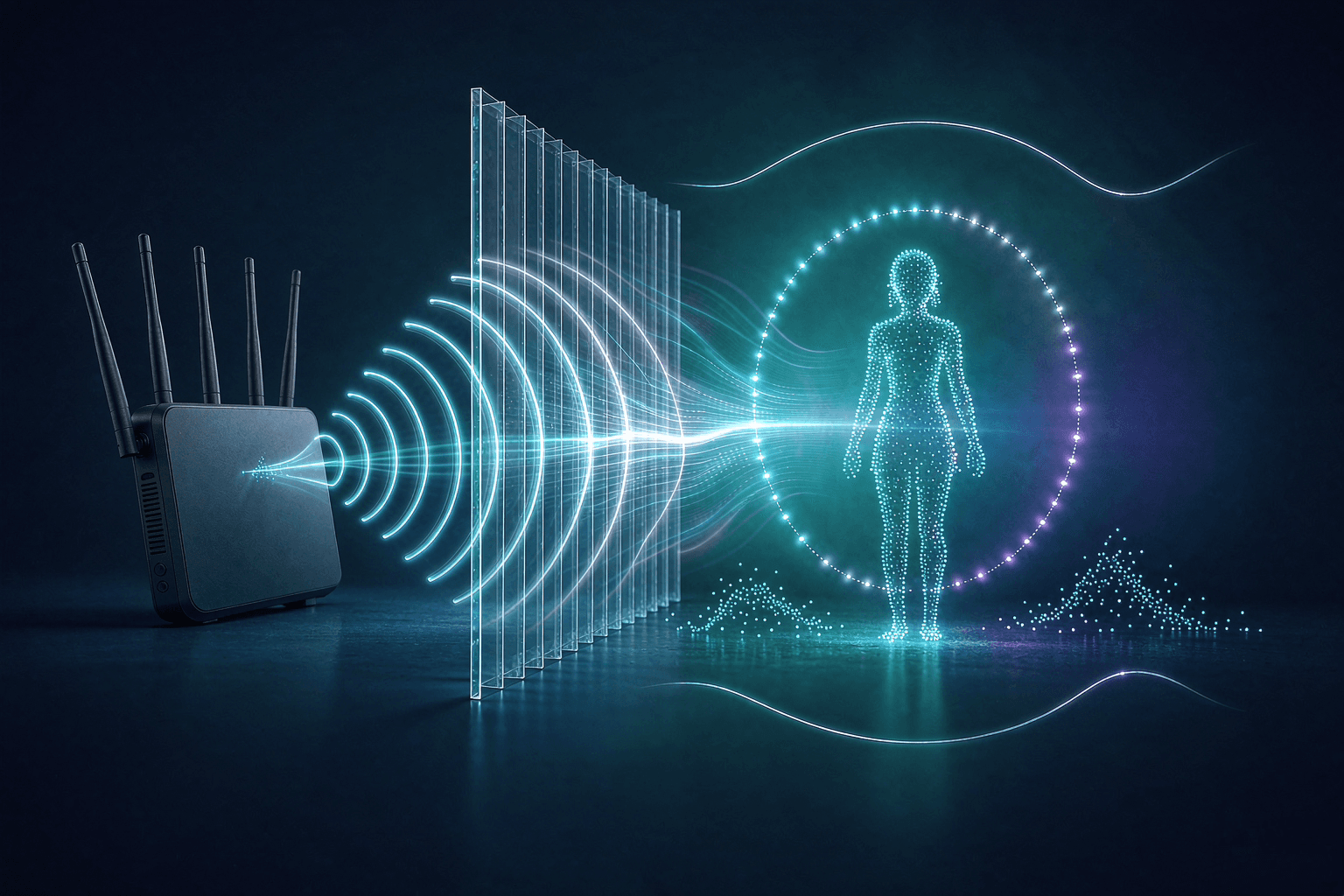
RuView (π RuView, also known as WiFi DensePose) is an open-source platform that converts ordinary WiFi signals into spatial awareness capabilities. It uses low-cost ESP32 sensors to collect channel state information (CSI), enabling wall penetration detection of people, measurement of vital signs such as breathing and heart rate, activity and fall detection, room-level environmental fingerprinting, and estimating the pose of 17 key body points under no camera conditions. The project is designed with a core focus on local edge execution – without cloud, without cameras, and without wearable devices, all unified under the MIT protocol and open source.
On September 30, 2026, RuView released version v2934. This release was automatically generated by the CI pipeline and is a regular iteration. It primarily added the Beamforming Feedback Information (BFI) validation capture and bounded research tooling, along with fixing a known security vulnerability in the Wasmtime dependency, while also releasing corresponding Docker images.
Key Highlights
New BFI Validation Capture and Bounded Research Tooling (#2055):
- Changes: `
(#2055). - Significance: BFI/BFLD (Beamforming Feedback Layer for Detection) is a relatively new layer of WiFi sensing capability in RuView. It utilizes the beamforming feedback information from 802.11ac/ax to perform sensing, and enforces three inviolable properties through its type system to prevent leakage of identity information: The raw BFI never leaves the node, identity embedding only exists in memory (in-RAM), and cross-site association is not feasible in a cryptographic manner (based on BLAKE3 key hashing + daily rotation per site).
- The newly added “
” and “” are designed to allow data collection and validation within controlled boundaries, serving as enhancements for the research toolchain rather than new features for end-users.
- Changes: `
Dependency Security Patch: Wasmtime (RUSTSEC-2026-0316)
- Changes:
<code fix(deps): patch Wasmtime for RUSTSEC-2026-0316</code>. - Significance: This patches a vulnerability reported in the RuView’s HOMECORE local automation component, which uses signed Wasm plugin mechanisms. Since this dependency directly affects the plugin execution path, users who have deployed it should upgrade.
- Changes:
Release and Artifacts
- The release was automatically generated by the CI pipeline, with the above two changes being included.
- Docker image synchronization: `
. - The release does not include binary assets; installation and deployment still rely on four primary methods: source code, container image, PyPI package, and firmware flashing.
Project Capabilities Overview
According to the README, RuView currently provides sensing and integration capabilities including:
- Sensing Capabilities: Person presence and occupancy (wall-penetrating, countable, trackable entry/exit), contactless breathing rate and heart rate, activity recognition (walking/sitting/gestures/falls), environmental mapping (RF fingerprinting of rooms, detection of furniture movement and new objects), sleep quality and apnea screening.
- Pose Estimation without Cameras: Estimating 17 key body points from WiFi CSI.
- Model Workflow: CSI recording, model training, RVF file loading, LoRA configuration switching; the self-learning module can encode any WiFi signal into a 128-dimensional environment fingerprint, with approximately 55,000 parameters and 55 KB of memory, which can run on an ESP32 for around $8.
- Smart Home Integration: Native support for four ecosystems: via HA-DISCO MQTT publisher accessing Home Assistant, as HAP-1.1 bridge to Apple Home and HomePod, and through the same HA bridge or Matter endpoint to Google Home and Alexa; each node provides 21 entities (11 raw signals + 10 inferred semantic states such as “someone is sleeping”, “potential danger”, “room is active”, “elderly person activity anomaly”, “meeting in progress”, “bathroom occupancy”, “fall risk increase”, “away from bed”, “no movement”, “cross-room transfer”), along with 3 starter guides.
- Local Automation and AI Integration: HOMECORE provides status, history, automation, signed Wasm plugins, voice hooks, and HomeKit support; RuView MetaHarness (
) provides source-referenced guidance, writable, controlled encoding agents, deterministic verification, and “truthfulness checks” for accuracy claims; the MCP servercan expose capabilities such as presence detection, vital signs, and BFLD scanning to AI agents. - Localization and Security: Environment learning is performed locally using pulse neural networks, which are claimed to adapt within 30 seconds; multi-frequency grid scanning across 6 WiFi channels; each measurement is secured through an Ed25519 witness chain.
Regarding Accuracy and Limitations
The RuView README provides clear disclosures regarding its capabilities, which differ from the official goals:
- The project is in , APIs and firmware may change.
- ESP32-C3 and original ESP32 are not supported (single-core, cannot meet CSI digital signal processing requirements); a single ESP32 deployment has limited spatial resolution, the official recommendation is to use 2 or more nodes.
- : The device-side
is a preliminary model, PCK@20 = 3.0%, which is lower than ADR-079’s target of ≥35%, and the runtime path currently has astub implementation. - The project has retracted the claim of “” (this number comes from single-class recording), and now uses temporal-triplet accuracy of 82.3% on an unlabeled
More News
Want to see more quality content?
Browse all news